
Thanks to Google, residents in Mountain View, California will have one less monthly utility bill to pay every month, their Internet. Starting in August 2006, Google is officially launching its free wireless Internet service called Google WiFi Mountain View. The service is completely free to the 72,000 residents of Mountain View and is not supported via ads.
What Is Google WiFi Mountain View?
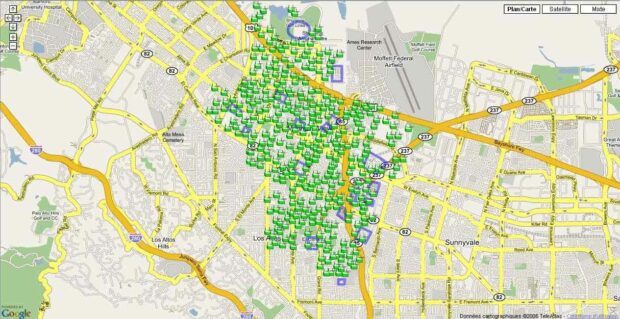
Google WiFi Mountain View is a mostly outdoor WiFi network that covers a 12 square mile radius of the town. 380 WiFi stations have been installed throughout the city giving anyone with a WiFi device 100% free access to the Internet. In addition to the outdoor access points, the Mountain View Public Library has been wired with indoor access points.
Why Is Google Giving Away Free Internet Access?
Google WiFi is part of Google’s community outreach efforts. Residents in Mountain View have a number of issues with a giant company, like Google, being in their town. For example, traffic is a major problem. Giving away free Internet is a small gesture from Google to the residents. It will also help Google employees stay connected as they roam around town eating meals and running errands.
How Fast Is Google WiFi?
Speeds have been reported at 1Mbps and Google is hoping that their product will convince many residents to drop their dial-up, DSL and cable Internet contracts. Although these speeds aren’t super fast, Google’s free alternative will be something that most people will embrace. People who still want their high-speed connections can still pay for it.
Where Else Can You Get Google WiFi?
If you’re not in Mountain View don’t despair, Google has teamed up with Earthlink for a more ambitious project – providing wireless Internet service to the San Francisco area. The San Francisco service will be a little different from the one now available in Mountain View in that it will be tiered. The free service (300 Kbps) will be supported by ads. If you want higher speeds (1 Mbps) without the ads, then you will have to pay a monthly subscription fee.
National WiFi Domination? What Exactly Is Google’s Longterm Strategy With Google WiFi?
So what is Google really up to here? Are the Mountain View and San Francisco locations just beta cities for something much bigger like national WiFi? Google has been quietly buying up miles of “dark fiber” across the United States for years. Add that fiber network to the Wimax routers and chipsets slated to hit the consumer market next year and Google could wipe out the telecom and cable companies before they knew what hit them. Think about it… Google could instantly become a national ISP, phone (VoIP) and TV provider for the entire country.
It sounds easy, but consider the deployment difficulties of a national wireless network. A single WiFi base station can only cover a limited area. With overlap, you are probably talking about 300-500 base stations per square mile depending on terrain. I’m no math major, but how many base stations would Google need to cover the entire United States? Over a billion? If Google did decide to build a national network, they’d probably have to hire all those former cable and DSL employees just to repair and maintain this massive network.
A national WiFi network isn’t exactly an unobtainable goal. SingTel, Asia’s largest multimarket mobile operator, estimates that the entire island nation of Singapore will boast of countrywide Wi-Fi coverage before the end of 2006. National Google WiFi domination. There’s something to think about.
Sources: Techie Diva, News.com
Related Articles:
- How To Secure Your Data from WiFi Hacking Attacks
- Funny WiFi Names That Will Make Your Neighbors Smile
- Scenarios Where You Really Should Be Using a VPN Service
- Really Scary Facts About Your Privacy on the Internet

Frank Wilson is a retired teacher with over 30 years of combined experience in the education, small business technology, and real estate business. He now blogs as a hobby and spends most days tinkering with old computers. Wilson is passionate about tech, enjoys fishing, and loves drinking beer.
















Leave a Reply